English| EUR
Suggested for you
More currencies
Choose a language
The 30-kilometer route between Salzburg and Berchtesgaden crosses the Austrian-German border through alpine valleys and forested slopes. Three transport options serve the route: direct bus service, train connections requiring one or two transfers, and self-drive via the B160 highway. Each method balances speed, frequency, and flexibility differently.
Quick answer
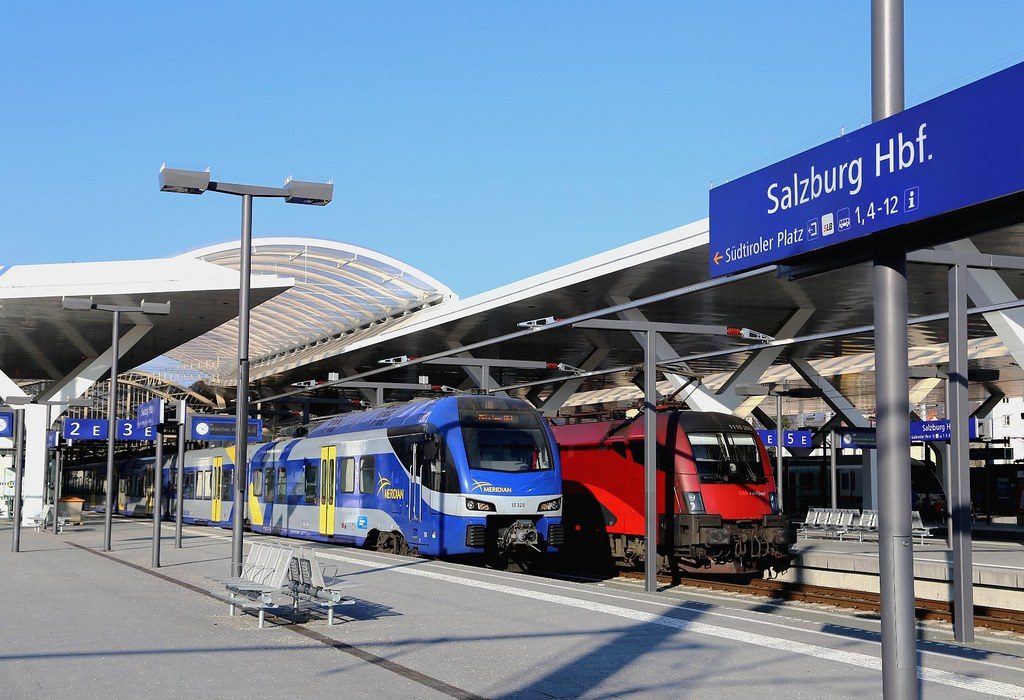
RVO bus 840 provides the most direct connection from Salzburg Hbf to Berchtesgaden Hbf, running every 30 to 60 minutes with a journey time of 45-55 minutes. Trains require at least one transfer at Freilassing, extending total travel time to 70-90 minutes. Self-driving via the B160 highway takes approximately 30 minutes under normal traffic conditions and offers the most flexibility for exploring the surrounding Berchtesgadener Land region.
The cross-border connection between Salzburg and Berchtesgaden was formalized in 1972 when RVO bus service replaced the discontinued rail spur that once linked the two towns directly. Today, bus 840 serves as the primary public transit artery, carrying over 400,000 passengers annually along a route that threads through Anif, Grödig, and the narrow Salzach valley before entering Bavaria. Understanding how to get from Salzburg to Berchtesgaden requires weighing three variables: directness, frequency, and luggage capacity. The bus departs from platform 7 at Salzburg Hauptbahnhof and stops at seven intermediate points before terminating at Berchtesgaden Hbf, adjacent to the town's main taxi stand and pedestrian zone. Tickets are purchased onboard or through the RVO mobile app, with cross-border fares integrating both Austrian and German transit zones. Rail travelers must transfer at Freilassing and sometimes again at Bad Reichenhall, a routing remnant of Cold War-era infrastructure that divided the regional network. The train option appeals to travelers with Eurail or DB passes, though departure coordination adds 20 to 30 minutes to the total journey. Drivers approach Berchtesgaden via the B160, a two-lane highway that parallels the Saalach River and climbs gradually from 424 meters at Salzburg to 520 meters at the German customs checkpoint. Parking in Berchtesgaden concentrates at four municipal lots near the Kongresshaus and Nationalpark-Zentrum, with rates starting at €1.50 per hour. The border crossing requires valid identification but no vehicle documentation beyond standard registration. Traffic peaks between 09:00 and 10:30 when day-trippers from Salzburg converge with tour coaches heading to Königssee and the Eagle's Nest. The Salzburg to Berchtesgaden transport corridor remains free of tolls on the Austrian side, though Germany's environmental zones apply to older diesel vehicles within Berchtesgaden's town center. Cyclists use the same route via the designated Tauernradweg path, a 28-kilometer segment that adds 15 kilometers of distance in exchange for grade-separated riding and Salzach River views. Winter service on bus 840 operates on the same schedule, with tire-chain requirements enforced only during active snowfall above 600 meters elevation.
“Bus 840 replaced the discontinued rail spur in 1972 and now carries over 400,000 passengers annually across the Austrian-German border.”
Berchtesgaden is located in the border region of Germany and Austria, accessible from Salzburg via direct public transit and regional road networks. The most direct connection between Salzburg Hbf and Berchtesgaden Hbf is via the 840 bus line.
840 regional bus from Salzburg Hbf to Berchtesgaden Hbf
S-Bahn or regional train from Salzburg Hbf to Berchtesgaden Hbf (via Freilassing)
A10 and B305 or B160 roads from Salzburg center
The best arrival window is 07:00–10:00. Early arrival avoids peak tourist congestion and ensures more reliable bus connections.
The best arrival window for traveling from Salzburg to Berchtesgaden is between 07:00–10:00. Arriving during this period helps avoid peak tourist congestion and ensures more reliable bus connections for your journey.
—
Early travel provides the most reliable connections and quieter transit conditions.
Mild temperatures of 12°C to 20°C
These months offer stable conditions before the peak summer tourism surge.
Warm temperatures of 15°C to 24°C
Expect significant congestion and increased demand for transport services.
Cooler temperatures of 7°C to 17°C
This period allows for efficient travel with fewer seasonal visitors at major transit points.
Verdict: Tuesday to Thursday, arriving between 07:00 and 10:00, during May or October offers the most predictable travel experience.
The cost of travel between Salzburg and Berchtesgaden depends on the specific mode of public transport selected for the route. Access to the public transit route itself is maintained at 0 EUR as noted in official transit guidelines.
Verdict: Travelers typically pay standard regional fares for bus or train tickets, which vary based on the specific carrier and ticket type selected.
Cross-border travel between Austria and Germany requires a few documents and practical preparations to ensure smooth connections.
Everything you need to know about how to get from salzburg to berchtesgaden
You can reach the region by using the regional bus 840, which runs directly between the two locations. This bus service provides reliable transit for those exploring the Bavarian Alps and surrounding landmarks.
Yes, the RVO bus 840 serves as the primary public transit route connecting Salzburg Hbf to Berchtesgaden Hbf. It offers a convenient link across the border region without the need for multiple transfers.
To ensure a smooth journey, the best arrival window is between 07:00 and 10:00. Arriving early helps avoid peak tourist congestion and ensures more reliable bus connections throughout the day.
Self-driving is an option for visitors who prefer flexibility when navigating the mountain roads. Ensure you have your international driving documents ready if traveling across the border.
Access to the public transit route between Salzburg and Berchtesgaden is available for 0 EUR. Please refer to official transit authorities for any specific regional travel pass requirements.
Train services are available, though most travelers utilize the bus 840 for a direct connection between the main stations. Always verify local schedules at the station before your departure.
The main mistake is arriving during peak midday hours when bus connections may be more crowded. Planning your trip early in the morning significantly improves the overall experience of your transit.